By Tamara Lawson, Marketing Assistant, Co-op Owner
One of my favorite berry-picking experiences was picking mashkiigimin (huckleberries) on state land with my gikaawinag (grandparents). I was so used to picking ode’imin (strawberries) that I was surprised by the concern my grandparents showed regarding my fashion ensemble that day. Long story short, ode’imin (strawberry) picking and maashkiigimin (huckleberry) picking are not the same type of berry pickin’! Research clothing and footwear before harvesting berries, and always be sure to tell someone where you are going. For an honorable harvest or sustainable forage, there are a few rules or requirements to keep in mind: always ask permission (from the plant or the land), never take the first or last of a plant, only take what is needed and use it all (do not waste anything), show reciprocity rather than just taking, and lastly, have gratitude and acknowledgement of the gift (harvest).
Ode’imin – Strawberry: Three common strawberry types grown in Michigan include day-neutral, June-bearing, and ever-bearing. If foraging, woodland, or wild strawberries are also a great choice. As a food sovereignty intern, I am lucky to be able to grow strawberries in a hoop house where I have less to consider than when growing berries outside. While June bearing berries might be ready the fastest, I have had the most success in flavor and growing season with the ever-bearing Albion. Ode’imin are the first fruit to ripen, and are often ready from the end of May, or mid-June until late-July. Because these berries do not ripen once picked, consider a smaller berry with a deeper red color vs a lighter red or pink color.
Fresh strawberry shortcake has always been my favorite ode’imin dish, but if it is too warm to bake shortcake, then a good vanilla ice cream with a large bowl of fresh strawberries folded into the dessert is also a great option. When you are looking for a more nutricious option, a spinach or lettuce mix combined with fresh berries, walnuts, and red onion is a perfect summer dinner. Even the greens are edible and can be added to a salad or made into tea. Birds love to snack on ode’imin.
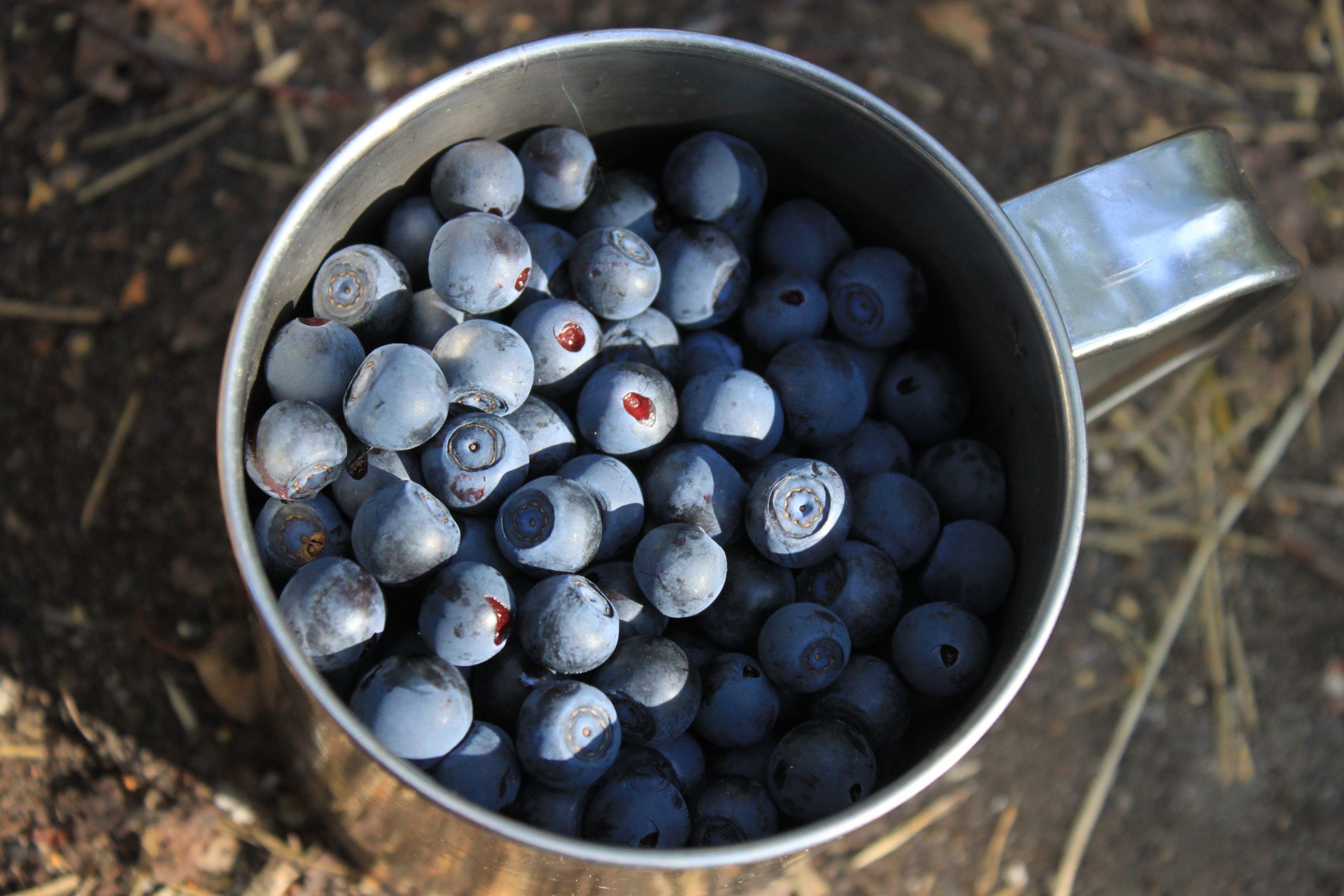
Miinan – Blueberry: While Michigan produces around 20 varieties of blueberries, the high bush miinan (blueberries) varieties dominate the lower peninsula with Duke in the early-season, Bluecrop in the mid-season, and Jersey and Elliot are common in the late-season. Lowbush miinan generally grow in the Upper Peninsula, and the popular varieties are Crispin and the aptly named Michigan Low Bush. Miinan harvesting is generally done mid-July to late September. Harvest these berries when the berry is fully blue, and falls off the stem easily. When mixed with cooked manoomin (wild rice), miinan, ode’imin, zhiiwaagamizigan (maple syrup), and a few other ingredients, it makes a healthy breakfast or side dish locally known as Manoomin Sweet Treat. Miinan are also tasty in breakfast pastries, pancakes, jams, jellies, compotes, and sauces. The leaves can be made into tea. Miinan are popular with black bears.
Mashkiigimin – Huckleberry: Three varieties of huckleberries grow in Michigan: the black huckleberry, the dwarf huckleberry, and the blue huckleberry. These wild berries are found in late July into mid-August. Mashkiigimin can be bright red or very dark blue and look like miinan, but they are generally smaller (and sweeter) with larger seeds. When opened, the inside of a huckleberry is blue or purple, while the inside of a blueberry is colorless, white, or light green. These berries should only be picked on sunny days to avoid moisture. This berry makes an excellent pie. Nokomis made mashkiigimin pie several times a year. Besides pie, maskiigimin can be used for jam and jelly, or in making pemmican. The leaves also make a traditional medicinal tea. Mashkiigimin is a favorite of both wild turkeys and bears.
Datkaagmin – Thimbleberry: Datkaagmin looks similar to miskomin (raspberries) and are also hollow, although they are much smaller. This delicate berry tastes just as beautiful as a rose smells. Foraging of this berry starts mid-summer in July and continues into August as they tend to ripen over several months rather than all at once. Oftentimes, datkaagmin season runs late, depending on when the Upper Peninsula thaws. This berry is probably the rarest Mishigami berry to find in a commercial setting. Datkaagmin makes a great jam or jelly and cobbler, but are also delicious eaten as the fresh berry that they are. This berry is very popular with bees, hummingbirds, butterflies, and moths alike!
Let’s talk about Brambles: Brambles are picky, trailing bushes that grow in tangled thickets in woodlands and hedgerows. They produce blackberries and raspberries, among other berries. The leaves from brambles can be made into tea, which many believe offers great benefits. Wildlife enjoy eating these berry types and even seek shelter in the prickly thickets.
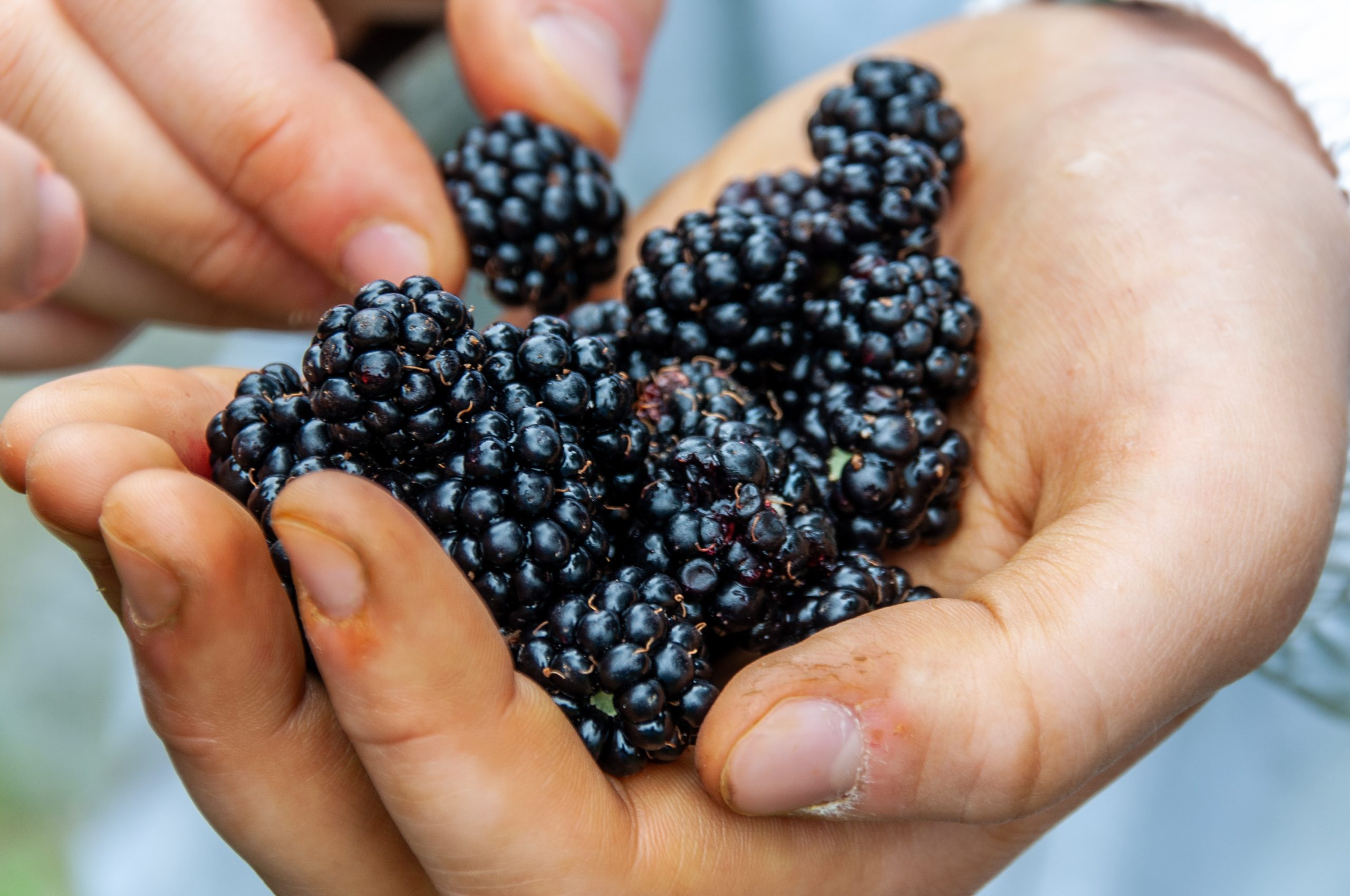
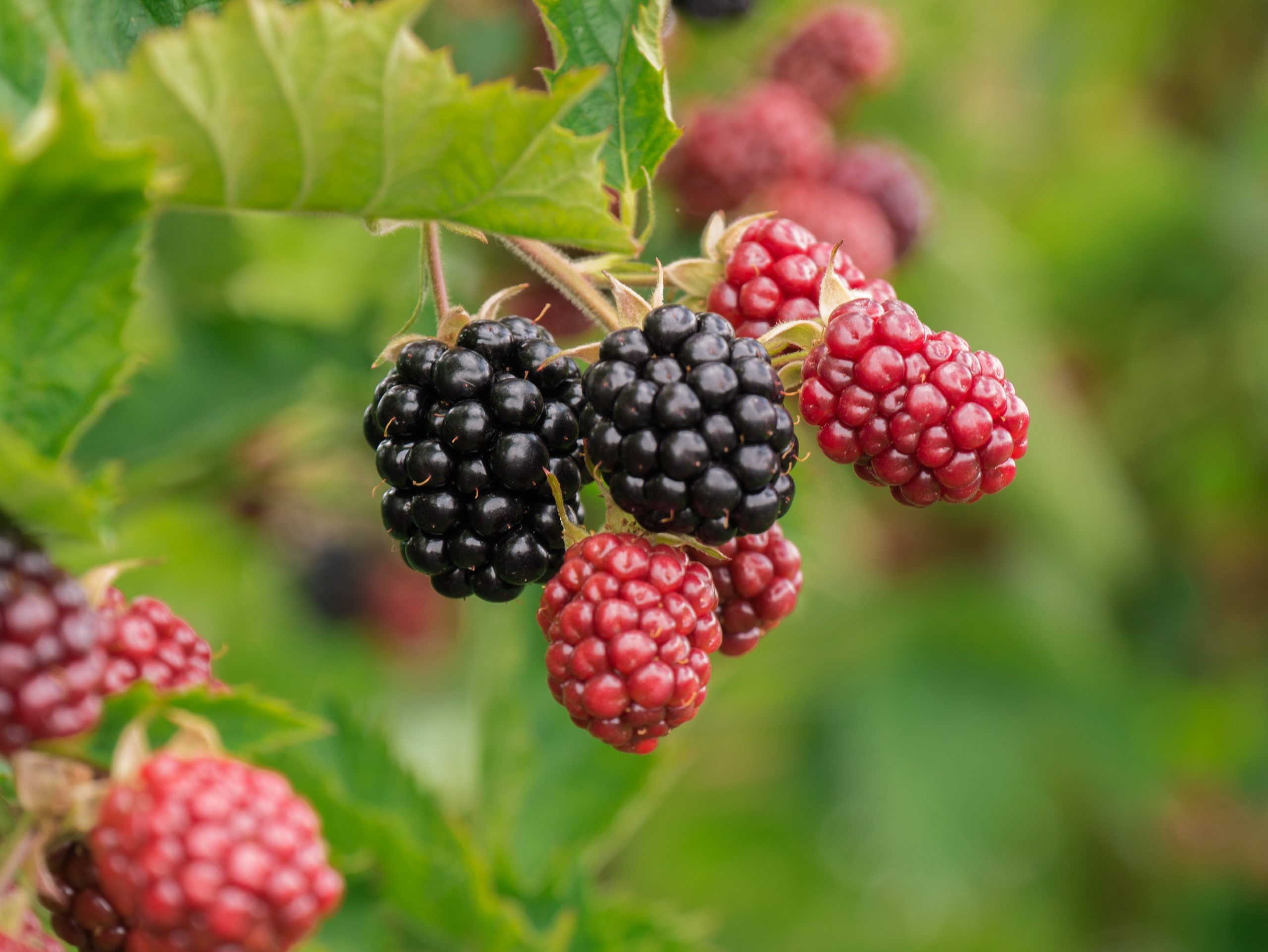
Odatagaagomin – Blackberry: These berries offer several varieties which can be thornless or thorny. When harvesting blackberries, they should be dark in color and a little on the soft side. Firm berries will not ripen further. The blackberry should be soft and even fall off the stem. Peak harvest season is from late July until late September. Mid-Michigan blackberries are mostly Darrow or Illini Hardy, both of which are of the thorny variety. Odatagaagomin are great in a smoothie, in a sauce, a compote, or muddled with some mint in a sparkling water for a perfect summer drink.
Miskomin – Raspberries: There are two growing seasons for miskomin. The first season runs from early July to mid-August for summer varieties, and the second season runs from late August until the first frost for fall-bearing types. Michigan raspberries are available in four different colors: red, black (blackcaps), yellow (gold or golden), and purple (a hybrid of red and black raspberries). The most common miskomin (raspberries) in central Michigan are the red and the blackcap raspberry. Ripe raspberries normally pull away from the plant without resistance; if they are stubborn, they are not quite ready. Because these berries do not ripen once picked, consider harvesting them when they have a deep, lush color. Plan to pick in the morning after the dew has dried to avoid mold. Raspberries taste best eaten off the fingers raspberry beret style, or in jam, pies, or sauce.
No responses yet